

A liquid flavour that performs well in loose moist snus can fail in an all-white nicotine pouch because the matrix, moisture, pH, pouch material and process are different. By the end, you will be able to match a flavour format to the product, define a usable technical brief, compare manufacturers and plan trials without confusing flavour approval with finished-product compliance.
Key takeaways
- Match flavour viscosity and concentration to pouch moisture, pH and filling equipment.
- Test release and stability in the finished pouch, not only in the flavour concentrate.
- Keep flavour documents separate from finished-product market approval records.
- Compare liquid, dry and encapsulated formats before choosing a development route.
Match the liquid flavour system to the pouch or snus matrix
Pouch weight, tobacco or plant-fibre content, moisture, water activity, pH, salt level, nicotine form and filling process determine the liquid flavour system. A tobacco-free nicotine pouch should not automatically be called snus: “snus” usually refers to a tobacco-containing oral product, while nicotine pouches use a plant-fibre matrix without tobacco.
| Product type | Matrix and process | Flavour implication |
|---|---|---|
| Loose moist snus | Tobacco; high moisture; loose filling | Dose into the tobacco mass and prevent wet spots |
| Pouched moist snus | Moist tobacco; heavier pouch; machine filling | Prioritise uniformity, low migration and seal compatibility |
| White snus | Washed tobacco; lower colour transfer; moist or semi-dry fill | Check staining, pH, salt and pouch permeability |
| Dry snus | Dry tobacco; low moisture and water activity | Use a low-moisture system that will not clump |
| All-white nicotine pouch | Plant fibre; low moisture; nicotine salt or free nicotine; lightweight fill | Control release, pH and migration |
| Tobacco-free pouch | Plant fibre; no tobacco; variable salt and humectant levels | Validate flavour in the actual fibre matrix |
| Oral sachet | Tobacco-free or botanical filler; sachet filling and heat sealing | Check coating, seal interference and pouch-to-pouch variation |
Four routes offer different compromises: direct dosing into the pouch matrix gives efficient incorporation but demands intensive mixing; spraying onto pouch material improves surface impact but risks staining, migration and seal interference; blending into filler improves distribution before filling; post-blend coating adds process complexity but allows late adjustment.
Specify dosage as w/w or w/v, on a finished-product or dry-mass basis. For trials, use 0.1% to 2.0% liquid concentrate by finished-product weight only as a development range, not a universal recommendation.
Calculate target batch weight × addition rate, dilute with a compatible carrier, then add through a preblend using a calibrated pump or weighed addition. Fix mixing time and retain a batch sample for pouch-to-pouch uniformity checks. A liquid flavour manufacturer for snus should reproduce the filling sequence, not test only a blotter.
Design the flavour for release, stability and sensory performance
Specify each ingredient by substance identity, oral-use status, regulatory assessment and target concentration, then define release by opening aroma, first-contact impact, mid-use release, persistence and aftertaste. A clear concentrate proves nothing: test solubility and dispersion in cellulose, plant fibre, tobacco, nicotine salts, sweeteners, humectants, salts and pH adjusters.
| Carrier | Primary effect | Confirm before use |
|---|---|---|
| Water | Fast mouth release; increases moisture pickup | Oral suitability, regulatory status and matrix compatibility |
| Glycerol | Slower release; retains moisture and reduces evaporation | Oral suitability, water activity impact and migration risk |
| Propylene glycol | Solubilises flavour; sharper release | Oral suitability, regulatory status and solvent-note risk |
| Ethanol | Rapid evaporation and opening aroma | Oral suitability, residual level, process loss and packaging compatibility |
Carrier choice changes evaporation, mouth release, moisture pickup, pouch shelf life and packaging migration. Test the finished matrix, not just a clear liquid.
- Record pH, water activity, moisture, salt concentration, storage temperature and nicotine level; heat, aeration, open-hopper exposure and long mixing can remove volatile notes, increase bitterness, change colour or cause flavour drift.
- Define mint, menthol, citrus, fruit, coffee, tobacco, spice or cooling concepts by sweetness, tobacco character, cooling intensity and bitterness masking; confirm legal permission for menthol or any cooling agent in each market.
- Investigate harsh nicotine impact, excessive cooling, chemical solvent notes, fading, precipitation, haze and flavour migration during final-package accelerated and real-time storage.
A controlled brief lets a supplier customize flavour solutions and customize flavour for b2b development without treating consumer preference as proof of performance.
Separate flavour documentation from finished-product market approval
A liquid flavour dossier supports ingredient review; it does not approve the finished nicotine product. A liquid flavour manufacturer for snus should supply:
- Ingredient identities, with CAS numbers or another substance identity where available.
- An intended-use statement naming the oral nicotine or tobacco application.
- An allergen declaration.
- A safety data sheet.
- A certificate of analysis and specification limits.
- The batch number, retained sample and traceability record.
- Evidence that every ingredient is permitted for the intended application.
Food-flavour authorization under Regulation (EC) No 1334/2008, FEMA status or GRAS status does not automatically authorize use in a nicotine pouch. IFRA Standards apply to specified fragrance categories; they do not turn a fragrance concentrate into an oral flavour.
Before approving a formula in India or an export market, identify the exact product class, nicotine source, claims, destination country and route to market. In the EU, check Article 7 of Directive 2014/40/EU on characterising flavours, then assess Article 17 restrictions on tobacco for oral use, including traditional snus; Sweden has a specific derogation.
In the United States, nicotine from any source can place a product under FDA tobacco-product authority, with a finished-product marketing pathway potentially required.
The liquid flavour manufacturer’s dossier supports review, but cannot replace legal assessment of the finished nicotine product, packaging, claims and market.
Compare liquid flavour with dry and encapsulated alternatives before testing
Liquid concentrate is the best process choice when you need precise, adjustable dosing and late-stage flavour correction. It becomes a poor choice for a dry, low-moisture process, dust-free handling, very long shelf life without a suitable carrier, or delayed release better delivered by encapsulation.
| Option | Dosing and dust | Release and process fit | Storage, equipment and cost |
|---|---|---|---|
| Liquid concentrate | Precise pump or weighed dosing; negligible dust | Immediate release; suits mixers, sprayers and late adjustment | Needs compatible carrier and liquid dosing equipment; low implementation cost |
| Spray-dried flavour | Precise dry dosing; dust requires controls | Rapid release after wetting; suits dry blending | Better dry storage; needs dust extraction and controlled feeding |
| Dry blend | Moderate precision; dust risk | Immediate release; compatible with dry fillers | Simple equipment; segregation and uneven dosing can increase rework |
| Encapsulated flavour | Controlled dosing; low dust | Delayed or protected release; needs suitable shear and moisture | Higher formulation and equipment cost; improves volatile retention |
| Flavour-coated pouch material | Precise coating weight; low dust | Release follows pouch contact and permeability | Requires coating and drying equipment; adds conversion cost and migration checks |
Evaluate formats in the finished matrix, not a solvent or blotter. A liquid flavour manufacturer should support this sequence:
- Bench sample in the finished matrix.
- Pilot batch on the actual mixer and filling line.
- Defined sensory panel, then accelerated and real-time stability at set temperatures and intervals.
- Final-package testing for pouch-paper permeability, film contact, seal integrity, leaking sachets, colour change and migration.
- Compare every result with a retained reference, recording sensory observations alongside physical or analytical results.
Use ISO 4120’s triangle test to detect a perceptible reformulation difference; it proves neither preference, safety nor compliance.
Select a manufacturer through a controlled B2B development process
Compare a liquid flavour manufacturer for snus on finished-pouch evidence, not catalogue size or concentrate price.
Send every supplier one brief covering pouch weight, target flavour strength, nicotine concentration, filler composition, moisture or water-activity target, pH, salt level, process temperature, residence time, mixing equipment, pouch and pack type, shelf-life target, target markets, benchmark, restricted ingredients and claims.
Ask whether the supplier provides:
- Actual oral-pouch application trials, sample rounds and pilot-batch support
- Minimum order quantity, lead time and repeat-batch consistency data
- Retained samples, a documented change-control procedure and technical support
| Compare | Evidence to request | Risk if absent |
|---|---|---|
| Development | Finished-matrix samples and agreed sensory benchmark | A good blotter sample fails in the pouch |
| Scale-up | Pilot batch using your mixer and filling process | Uneven pouch-to-pouch flavour |
| Control | Specification, batch records, retained sample and change notifications | Untracked flavour drift or rework |
Calculate total effort, including formulation rounds, pilot trials, analytical testing, regulatory review, minimum batch size and rework after late changes. A practical workflow is brief, sample rounds, agreed sensory benchmark, technical validation, specification approval, production release and documented change control.
Khattri Aromas LLP is worth evaluating as a customize flavour solutions or customize flavour for b2b partner only against this evidence. The search phrase custamize flavour manufacturer signals the same buying need; liquid flavour manufacturer for snus capability is proven by repeatable pouch results and controlled records.
Related product
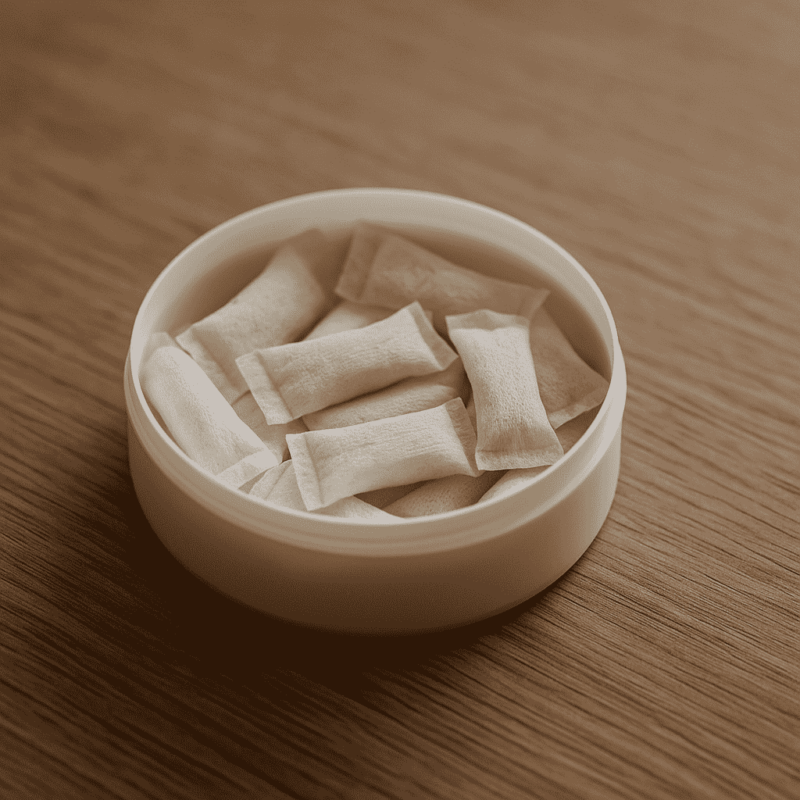 | Flavours Snus Flavours Snus and modern smokeless nicotine pouches represent one of the fastest-growing segments within the broader tobacco and nicotine products industry,... |
Frequently asked questions
How do you match a liquid flavour system to a snus or nicotine pouch matrix?
Assess pouch weight, tobacco or plant-fibre content, moisture, water activity, pH, salt level, nicotine form and filling process before selecting the liquid system.
What should you test when developing liquid flavour for snus products?
Test flavour release, stability and sensory performance in the finished pouch, including how the matrix and processing conditions affect the result.
Are flavour documents the same as finished-product market approval?
No. Flavour specifications and safety documents identify the flavour material, while finished-product approval covers the complete snus or nicotine pouch and its market requirements.
When should you compare liquid flavour with dry or encapsulated flavour?
Compare all three formats before testing when release timing, storage stability, processing compatibility or flavour protection could affect the finished product.