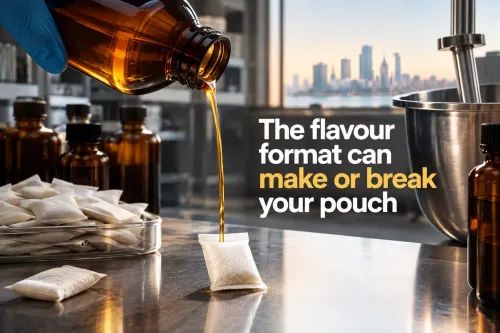
A fragrance sample is not enough to approve a detergent, cleaner, disinfectant or air-care product. You need documents that identify hazards, confirm the supplied batch, define permitted use and support controlled testing from laboratory trial through commercial release.
Key takeaways
- Request SDS, COA, IFRA and TDS documents for the exact fragrance batch.
- Test fragrance in the finished formula at target dosage and packaging.
- Check stability at Lagos storage temperatures before approving production.
- Require batch traceability from supplier sample through finished-product release.
What “fragrance with technical documents” should include
Request fragrance with technical documents for home care in Lagos against the finished product, not a generic scent sample. State the product type, dosage, base pH, surfactant system, oxidizer or preservative exposure, packaging, target market and storage conditions. “Fragrance with technical documents” is useful only when the documents match that application.
1. Current SDS or MSDS: Check hazard classification, signal word, pictograms, first-aid, fire-fighting, spill control, PPE, handling, storage, transport and disposal instructions.
2. Batch-specific certificate of analysis (CoA): Require the lot number, test results, appearance, colour, odour and supplier release criteria. Do not accept a general specification as proof of the delivered batch.
3. Technical data sheet (TDS): Ask for recommended dosage, suitable product types, incorporation temperature, solubility or solubilizer guidance, shelf life, storage temperature and known incompatibilities.
4. IFRA conformity document or intended-use statement: It must name the relevant product category and maximum concentration in the finished product. Approval for detergent does not automatically cover bleach or another format.
5. Allergen, restricted-substance and composition or regulatory declaration: Use these for formulation review, customer audits and regulatory files.
6. Certificate of conformity, where applicable, plus batch traceability records: Match the shipping documents, drum labels and retain sample to the approved lot.
For fragrance for home-care products, also request packaging-compatibility evidence for the actual bottle, cap, liner, gasket or pouch. Bleach and strong oxidizers need a separate review because they can discolor, destroy odour or generate unacceptable breakdown products.
What the SDS, COA, IFRA document and TDS each prove
A fragrance can smell right in a sample and still fail approval because each document answers a different question. Treat “fragrance with technical documents” as a controlled set, not as one certificate.
| Document | What it proves | What it does not prove |
|---|---|---|
| SDS or MSDS | The supplied mixture’s hazards, pictograms, signal word, first aid, spill response, PPE, storage, transport and disposal guidance | That the finished detergent, cleaner or air freshener is safe, stable or legally approved |
| IFRA conformity document | Conformity with the applicable IFRA Standard for the named home-care category and stated maximum concentration in the finished product | A universal approval for every formula, a complete safety assessment or compliance with Nigerian registration requirements |
| COA | That the identified batch was tested against stated limits, such as appearance, odour, specific gravity or refractive index, where specified | That another batch will match, or that the fragrance will perform in your finished product |
| TDS | The supplier’s technical description, including recommended use, physical properties, storage conditions, shelf life and handling limits | Hazard classification, batch release or conformity for a different application |
A fragrance with MSDS helps your warehouse and safety teams manage the supplied material; it does not replace formulation testing. A fragrance with COA gives quality evidence for one lot, not a guarantee of finished-product stability.
Check the fragrance code, supplier name, revision date, batch number, application and specification limits across every file, the sample label and purchase specification. A fragrance with COA or fragrance with technical documents becomes a warning sign when those identifiers do not match.
How to test fragrance in the exact home-care formula
A fragrance is suitable for a specific home-care formula only when it remains stable, compatible and acceptable at the intended dosage in the finished product—not merely pleasant on a smelling strip.
1. Make the trial in the exact base: same surfactants, water quality, pH, preservative, colour, active ingredients and manufacturing sequence. Test the proposed dosage, plus the supplier’s upper recommended level, against an unfragranced control.
2. Check incorporation. Record whether the fragrance disperses without oil rings, clouding, sediment, excessive foam or a separate layer. Confirm the required mixing time, addition point and temperature; a fragrance that smells good but needs an unsuitable solubilizer is not production-ready.
3. Measure the finished product immediately and after storage. Record appearance, colour, odour, pH, viscosity, density and phase separation. Compare samples at the intended storage condition and an agreed accelerated condition, then repeat the odour check because heat can flatten, distort or intensify fragrance character.
4. Examine formula interactions. Check whether the fragrance changes preservative performance, active-content assay, disinfectant claims, bleach stability or colour. A fragrance with technical documents for home care in lagos still needs testing in your own raw materials and process.
5. Fill the actual bottle, cap, gasket, pouch or drum and inspect for swelling, softening, stress cracks, leaks, discolouration and fragrance loss. Confirm the chosen fragrance for home-care products remains within the intended IFRA category and finished-product concentration. Keep the tested batch number with the approval record.
Why Lagos storage and batch traceability change the approval decision
In Lagos, a fragrance lot can pass the supplier’s release test and still fail after a hot delivery, warehouse delay, or contact with the final pack. Approve it against the journey and formula it will actually face, not against a sample judged at room temperature.
Ask the supplier to state a storage temperature range, light protection, maximum storage period, container material and transport limits. Record any exposure during delayed unloading or storage in a non-air-conditioned warehouse; heat and repeated temperature changes can alter colour, volatility and odour.
Before approval, document:
- The expected transport route and time in transit
- Warehouse temperature records and direct-sunlight exposure
- The fragrance container, liner, seal and closure material
- The finished pack used for compatibility testing
- The retained reference sample and approved odour description
Packaging compatibility belongs in the qualification file. A fragrance for home care products can stress-crack a plastic bottle, swell a gasket, soften a liner or extract substances from the pack. Test the actual bottle, cap, pouch or drum after contact with the fragrance and finished formula.
A fragrance with COA proves that the identified lot met listed incoming specifications; it does not prove stability in an alkaline, acidic, high-surfactant or bleach-containing base. A fragrance with MSDS explains hazards and handling, not finished-product performance.
Keep the lot number, production date, expiry or retest date and delivery record linked to each finished batch so a customer audit can trace the material quickly.
Khattri Aromas LLP should be assessed on this application-specific evidence, including a retained-sample comparison after storage, because acceptable physical values do not guarantee unchanged odour.
Related products
 | Fragrances Customized Home Care Fragrances for Modern Cleaning and Hygiene Products, The home care industry has evolved beyond basic cleaning products, with... View product → |
 | Fragrances Air care Fragrance Innovative Fragrance Solutions for Air Freshener Manufacturers Creating a pleasant indoor environment starts with the right fragrance. |
A practical supplier request and approval sequence
Ask for a complete document set before you approve a sample, and release production only after the same batch passes your finished-product trial. A request for “fragrance with technical documents for home care in Lagos” is useful only when it names the product, dosage, base pH, surfactants, oxidizers, preservative system, packaging and storage conditions.
1. Send the supplier your application brief. State whether the product is detergent, fabric softener, air freshener, disinfectant or bleach, and identify the target market and maximum fragrance dosage. Request a sample code and the current SDS, TDS, IFRA conformity document, allergen or restricted-substance declaration, storage guidance and shelf-life statement.
2. Check the paperwork before testing. Ask for a fragrance with COA for the specific sample or batch, not a generic certificate. Match the fragrance code, supplier identity, revision date, batch number, specification limits and intended application across the SDS, COA, TDS, IFRA document and sample label.
3. Test the fragrance in your actual formula. Record odour, colour, clarity, pH stability, separation, viscosity and packaging compatibility after the stated incorporation process. Run a separate compatibility review for bleach, chlorine-releasing products and strong oxidizers; detergent performance does not approve the same fragrance for those bases.
4. Request written answers to every failed or unclear result, then approve a defined formula, dosage and batch specification. Do not accept a general “home-care” approval.
5. Release production only against an approved purchase specification and batch COA. File the signed approval, retain the reference sample and require new review when the fragrance code, formulation, supplier or specification changes.
Frequently asked questions
What should fragrance with technical documents include?
Request the fragrance sample, SDS, COA, IFRA certificate or conformity statement, TDS, batch number, recommended dosage and storage instructions. Give the supplier your product type, base pH, surfactants, oxidizers, preservatives, packaging and target market.
What do the SDS, COA, IFRA document and TDS prove?
The SDS describes hazards, handling, storage and emergency controls. The COA records test results for a specific batch. The IFRA document addresses use restrictions for the intended product category and market. The TDS describes technical properties, recommended use and storage conditions.
How should you test fragrance in a home-care formula?
Evaluate the fragrance at the intended dosage in the finished formula, then check odour, colour, clarity, viscosity, pH, phase separation, packaging compatibility and performance after storage. Include exposure to the formula’s surfactants, preservatives and oxidizers.
Why do Lagos storage and batch traceability affect approval?
Heat, humidity and transport conditions can change fragrance odour, colour, clarity and packaging compatibility. Set storage and transport controls, retain the batch number, and connect the approved sample, documents, production batch and finished-product release record.
What should you request before approving a home-care fragrance supplier?
Send a written application brief, then request a matched sample and current SDS, COA, IFRA document and TDS. Test the sample in the finished formula, review stability and packaging results, approve the batch, and define change-notification and traceability requirements.
Related products
 | Fragrances Household products Fragrances Household Product Fragrance Manufacturers| Customized Fragrance Solutions for Household Product Brands, Innovative Fragrance Solutions for Household... |
 | Fragrances Body Care Fragrance Premium Body Care Fragrances for Cosmetic and Personal Care Manufacturers Fragrance plays a vital role in shaping the consumer experience of body... |
 | Fragrances Detergents Fragrances Premium Detergent Fragrance Solutions for Cleaning Product Manufacturers, In the detergent industry, fragrance is more than just a pleasant scent—it... |
 | Fragrances hair care Fragrances Premium Hair Care Fragrance Solutions Tailored for Manufacturers At Khattri Fragrances, we specialize in developing premium-quality, customized... |