
A beverage flavour that smells impressive in water can fail after acidification, carbonation, heat treatment, storage or contact with minerals. You will be able to brief a Lucknow flavour manufacturer, compare formats and suppliers, and validate a sample in the finished drink before approving production.
Key takeaways
- Include pH, Brix, carbonation, process, serving size, and packaging in the brief.
- Match flavour format to the beverage base, processing conditions, and storage life.
- Compare documentation, batch consistency, and scale-up support—not just sample bottles.
- Test samples after processing and packaging before approving a commercial batch.
How a custom beverage flavour project moves from brief to production
1. Start with a written brief for a partner that can customize flavour for manufacturing companies in lucknow. State the drink type, serving size, sensory reference, target pH, Brix, carbonation, process and packaging.
2. Submit the current beverage base or a precise formula summary. List the water source, sweetener, acidulant, preservatives, minerals, vitamins and botanical extracts.
3. Ask the flavour house to recommend the format and dosage range. For each prototype round, require the composition, use level and application method in writing.
4. Test every sample in the intended beverage base, not water alone. Acidity, carbonation, minerals, preservatives and heat can change intensity, balance and stability.
5. Give specific feedback: “increase lime top note after pasteurisation” or “reduce bitter botanical finish.” “Make it stronger” does not identify the problem or the required change.
6. Before development begins, agree on the number of prototype rounds, approval sample, acceptance criteria and change-control process. Set sensory, dosage, colour or turbidity, process and storage limits.
7. After approval, request the final specification, certificate of analysis, allergen statement, carrier or solvent details, regulatory information, storage conditions, shelf life and batch-traceability documents.
8. Record whether the flavour is added before processing, after cooling or through a separate stream. Complete a pilot batch and obtain sign-off before routine manufacture.
Which flavour format fits your beverage base?
Choose the format by how the finished beverage behaves, not by aroma strength alone. These beverage flavour solutions fit common bases as follows:
| Format | Best fit | Main check |
|---|---|---|
| Water-soluble | Clear still drinks, syrups and many powdered mixes | Rapid dispersion and low visual impact |
| Oil-soluble | Oil-compatible systems and strong aroma profiles | Dispersion in water-based drinks |
| Emulsion or clouding system | Cloudy citrus drinks and consistent visual appearance | Creaming, ring formation, sedimentation, phase separation |
| Encapsulated | Drying, powder handling and heat exposure | Protection and release of volatile top notes |
| Powder | Instant mixes, sachets and dry premixes | Carrier dissolves without grit or sediment |
Oil-based citrus flavours in water-based drinks need more than aroma matching. Request storage-condition evidence for turbidity, particle size, creaming, ring formation, sedimentation and phase separation.
Carbonated drinks, acidic syrups, dairy drinks and functional beverages need a matrix-specific recommendation. Acidity, salts, preservatives, sweeteners, minerals and carbonation change dispersion and perceived intensity, while heat can strip top notes. Ask for pre-process and post-process comparisons and confirm whether the flavour enters before heating, after cooling or through a separate stream.
Compare customize flavour solutions at the same finished-drink concentration. A price per kilogram misleads when one quote covers a neat flavour and another covers an emulsion, premix or carrier-diluted preparation. Request the recommended use level in grams or millilitres per litre of finished beverage.
How to write a beverage flavour brief that survives processing
A useful brief gives the flavour manufacturer a finished-beverage target, not just “make it more fruity.” Use this procedure before requesting beverage flavour solutions or asking a partner to customize flavour solutions.
1. Identify the beverage base, target serving size, sensory reference, trial dosage range, pH, Brix, carbonation level and processing temperature. Define pH numerically; “tangy” is not a specification.
2. State the process: cold-filled, hot-filled, tunnel-pasteurised, retort-processed or blended after cooling. Record whether flavour enters before heating, after cooling or through a separate stream, because heat can strip volatile top notes.
3. Name the pack—PET, glass, aluminium can or multilayer pouch—and set the intended shelf-life target. Request pre-process and post-process comparisons, not a water-only sample.
4. Supply the actual water profile or a pilot sample. Include chlorine, hardness, alkalinity and mineral content; these alter taste and emulsion behaviour. List citric or malic acid, sweeteners, salts, preservatives, caffeine, vitamins, minerals, herbal extracts and colour.
5. Add restrictions: permitted flavour declarations, allergen exclusions, vegetarian or vegan requirements and FSSAI review points. Low pH can sharpen sourness and expose bitterness; carbonation lifts aroma but changes mouthfeel.
6. Agree before prototyping on colour, turbidity, sediment, phase stability and sensory limits. Define the minimum and maximum dosage, then approve against the same formula, process and pack planned for production.
How to compare Lucknow flavour manufacturers beyond the sample bottle
A company seeking to customize flavour for manufacturing companies in Lucknow should compare suppliers at the same finished-beverage dosage, not by smelling the neat sample. Test the beverage matrix for sensory match, solubility, clouding, colour impact, sediment, phase separation, heat and light stability, and aftertaste.
| Check | Evidence to compare | Failure it exposes |
|---|---|---|
| Product performance | Equal dosage in the final formula | A sample that works only in water |
| Manufacturing control | Controlled weighing, sanitation, batch records, traceability and release testing | Variation between batches |
| Supply readiness | Minimum order quantity, lead time, production location, retained samples, complaint process and recall capability | Delayed supply or weak response |
| Storage control | Stated transport/storage range, excursion policy, summer-heat and light protection | Damage from heat, cycling or warehouse dwell |
| Qualification pack | Specification, appearance and odour, use level, carrier or solvent, allergens, regulatory status, certificate of analysis, shelf life and safety data | Procurement and change-control gaps |
Khattri Aromas LLP belongs in the same comparison: assess its customize flavour solutions against documented manufacturing controls, not its most attractive prototype.
ISO 22000, HACCP or GMP certification supports review but does not prove beverage performance. Ask for technical support during pilot trials, then confirm FSSAI licensing and the actual product’s labelling review, including added-flavour declarations and permitted-use requirements. Put storage conditions and excursion handling into the purchase agreement.
Related product
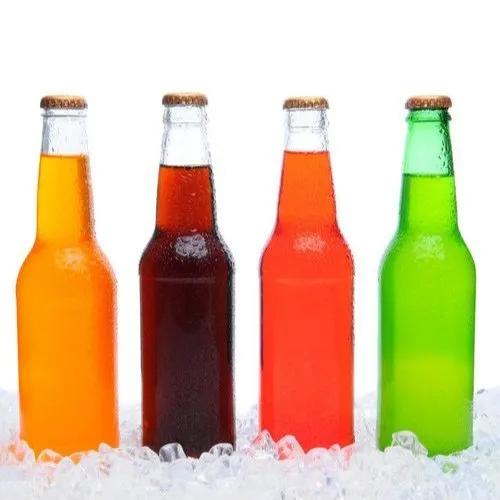 | Flavours Beverage flavours Category Overview & Market Landscape The global beverage industry is arguably the most flavour-dependent category in all of consumer packaged goods. |
How to test a flavour before approving a commercial batch
Approve a flavour only after it survives the finished beverage, process, package and storage period—not just a day-one tasting. Use the brand’s actual water: chlorine, hardness, alkalinity and minerals can alter flavour perception and emulsion behaviour.
Run bench trials at low, target and high dosage in the final formula. Record these results immediately after blending and again after the intended process:
- pH, Brix, carbonation, colour and turbidity
- Aroma, flavour intensity, sweetness-acid balance, bitterness, metallic notes, botanical interaction and aftertaste
- For emulsions: creaming, ring formation, sediment and phase separation
| Trial stage | What to compare | Failure it exposes |
|---|---|---|
| Low, target and high dosage | Finished-drink sensory match and dosage window | Choosing a flavour that works only at one level |
| After processing | Heat, carbonation and packaging performance | Loss of volatile top notes or package interaction |
| Storage samples | Day 0, 7, 14, 30 and planned shelf-life endpoint | Approving on day-one performance |
| Accelerated storage | Directional comparison with real-time samples | Treating an estimate as shelf-life evidence |
Produce a pilot batch on the real equipment in the intended packaging. Use accelerated storage only as a comparison tool; use real-time evidence for approval. Run freeze-thaw testing when freezing or temperature cycling is expected, and check carbonation retention in carbonated formats.
Test functional drinks with their actual vitamins, minerals and extracts. Do not increase dosage to hide weak sweetness or acidity, or select a flavour before finalising the base. Write acceptance criteria for sensory match, dosage, colour or turbidity, microbial requirements, process performance and storage results.
These records give beverage flavour solutions a defensible commercial release decision.
Frequently asked questions
What should a beverage flavour brief include?
State the drink type, serving size, sensory reference, target pH, Brix, carbonation level, processing method, and packaging format. Include the desired flavour profile and any ingredients or claims the formula must avoid.
How do you choose a flavour format for a beverage base?
Match the flavour format to the base’s water or oil content, acidity, carbonation, heat exposure, and packaging. Confirm dispersion, clarity, taste after processing, and stability during storage before selecting it.
How can you compare flavour manufacturers in Lucknow?
Ask for sample specifications, technical documents, batch traceability, minimum order quantities, lead times, scale-up procedures, and support during pilot and commercial production. A sample bottle alone does not show manufacturing reliability.
How should you test a beverage flavour before approving production?
Test the flavour in the final beverage formula, then evaluate it after the planned process, carbonation step, packaging, and storage period. Compare aroma, taste, colour, clarity, sediment, and batch-to-batch consistency against agreed acceptance criteria.