
A usable mouth-freshener flavour brief must go beyond “minty” or “long-lasting freshness”: it must define the finished format, ingredients, process, sensory targets, dosage and regulatory market. By the end, you will know what to include in the brief, which flavour delivery system fits your process, how samples should be tested and which technical documents to request before approval.
Key takeaways
- Describe the finished product, process, pack and sales market before requesting samples.
- Match the flavour system to powder, coated, liquid or tablet processing.
- Calculate dosage in the finished mouth freshener, not only in the flavour concentrate.
- Request food-use, allergen, stability and batch documents before approving a supplier.
The development brief starts with the finished product, not the flavour name
A flavour name is not a development brief. Tell the custamize flavour manufacturer what the finished mouth freshener is, how it is made, and where it will be sold before requesting a sample.
1. Identify the format: sugar-coated saunf, mukhwas, pellet, compressed tablet, powder sachet, liquid concentrate, chewing product, digestive product, or an areca-nut product.
2. Provide the base formula, including fennel, anise, sugar, sweetener, salt, acids, colours, oils, binders and coating materials. State ingredients the flavour must avoid, such as alcohol, allergens or artificial colours.
3. Describe the process: mixing or coating temperature, residence time, drying conditions, compression force, flavour addition point and expected production equipment. A flavour that survives a bench sample can fail during hot coating or drying.
4. Set sensory targets in measurable terms: mint intensity, cooling strength and duration, fennel or anise character, sweetness, bitterness masking, aroma release and acceptable aftertaste. “Strong mint” is not reproducible.
5. State the target dosage in the finished product, target cost per kilogram, expected shelf life, pack type and storage conditions. Include the target consumer and the regulatory market, such as India.
6. Ask whether the supplier can provide pilot batches, scale-up support, stability testing and a written batch specification for the proposed custom mouth freshener flavour.
Keep food flavour development separate from fragrance development. IFRA documentation for an external fragrance does not prove that a flavour is suitable for ingestion, especially when the finished product falls under a specific food or areca-nut category.
Match the flavour system to the mouth-freshener format and process
Choose the carrier after classifying the finished product and process, not after choosing “mint” or “fennel.” Sugar-coated saunf, compressed tablets, powder sachets, liquid sprays and products containing areca nut impose different mixing, drying, compression, labelling and food-category constraints.
| System | Best fit | Main risk to check |
|---|---|---|
| Liquid, water-soluble | Liquid concentrates, wet granules, water-based sprays | Haze, separation or uneven distribution in oil-rich bases |
| Powder | Dry mukhwas, sachets and products mixed without heat | Poor flow, dusting or localised flavour if blending is short |
| Spray-dried powder | Dry coating, granules and compressed products needing free-flowing flavour | Volatile mint loss during drying or weak release after compression |
| Encapsulated | Heat exposure, long storage or controlled mint release | Delayed aroma, incomplete release or coating damage during mixing |
| Oil-soluble | Sugar coatings, oil-based coatings and lipid-rich products | Wetting, migration, oxidation or poor dispersion in water-based systems |
A mouth freshener flavour manufacturer should test the selected system in the actual base at the intended dose. An oil-soluble flavour that gives a strong coating aroma can wet a powder, separate in a liquid, or distribute unevenly through a tablet blend.
Ask a custamize flavour manufacturer to compare pilot batches after coating, drying, compression and storage. Include the finished-food category in the specification: a product containing areca nut may fall under pan masala or areca-nut provisions rather than ordinary confectionery, changing permitted substances, additive limits and label information.
Define sensory performance and calculate dosage in the finished product
Specify sensory performance as measurable attributes in the finished mouth freshener, then lock the flavour addition as a percentage of the final batch weight.
- Mint intensity: rate the opening aroma and taste on a defined scale, such as 0 to 10.
- Cooling: state onset, strength and duration separately from mint; menthol increases both, while other cooling agents can add chill with less mint aroma.
- Sweetness interaction: record whether the flavour sharpens, dulls or increases the base sweetener.
- Spice character: identify fennel, anise, cardamom, clove or other notes and their target intensity.
- Aftertaste: specify its character and duration, such as clean, herbal or bitter at 30 and 120 seconds.
- Dosage: state the target percentage, addition point and tolerance, such as 0.80% ± 0.05% of finished product weight.
Calculate dosage as flavour weight ÷ finished product weight × 100. For a 100 kg batch at 0.80%, add 0.80 kg of flavour; do not calculate against the coating or syrup alone.
Approve the custom mouth freshener flavour in the finished format at its intended dose, not from a blotter or neat concentrate. A trained panel can score mint, cooling, sweetness, spice and aftertaste; triangle testing can identify a meaningful difference between prototypes before buyer or consumer acceptance testing.
For a mouth freshener flavour in lucknow, require the same sensory scorecard, batch tolerance and dosage calculation in every pilot and production trial. This makes a local customisation brief reproducible across suppliers and formats.
Build heat, coating and storage trials into the sample process
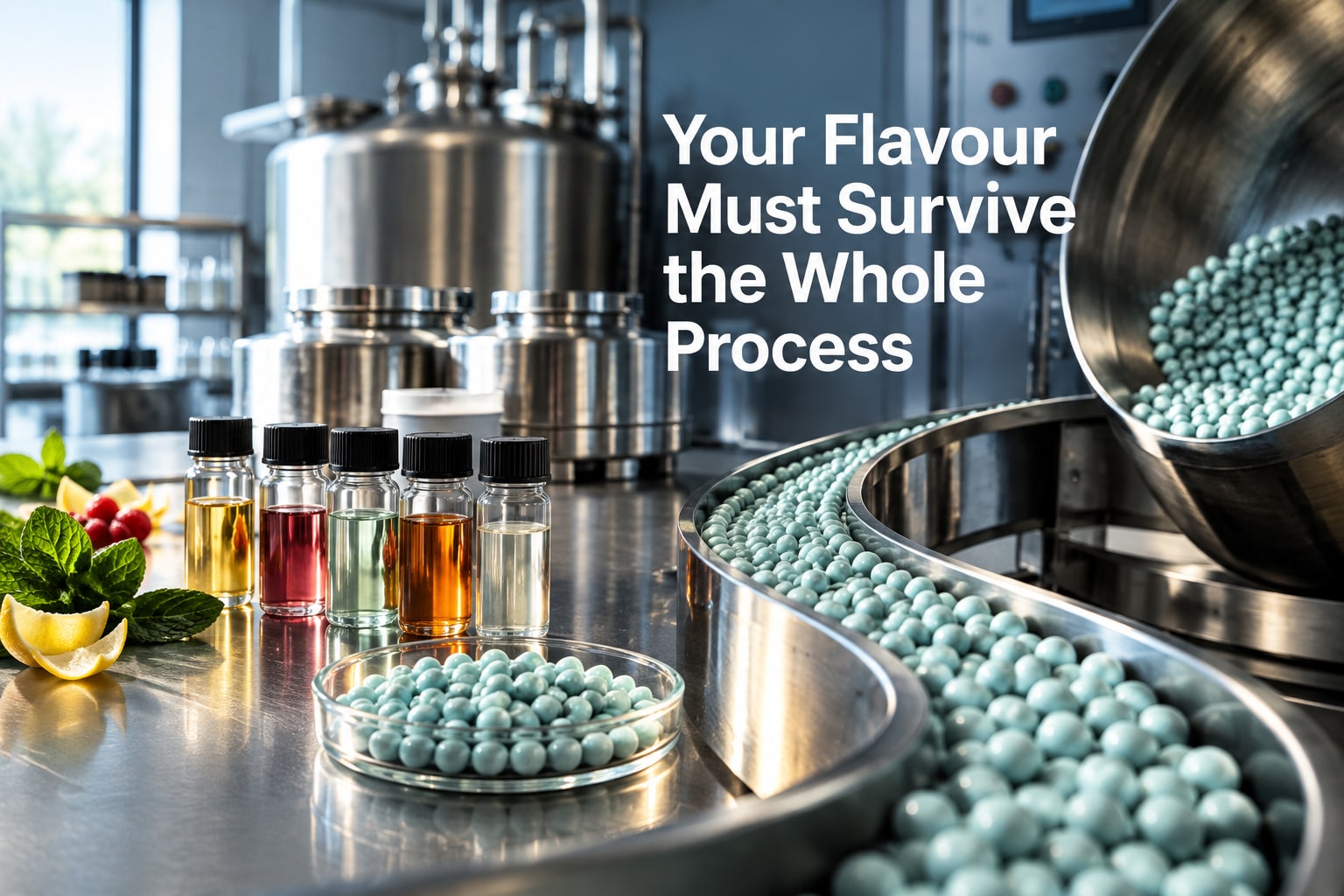
Approve a flavour only after it survives the product’s actual heat, coating, mixing, compression and storage conditions. A mouth freshener flavour manufacturer should test the finished recipe, not only send a concentrated aroma strip or liquid sample.
1. Run a bench trial in the intended base. Record flavour form, carrier, dosage, mixing time and temperature, then check mint intensity, cooling duration, fennel or anise character, bitterness and aftertaste.
2. Make a pilot batch using the proposed coating, drying or compression process. Check volatile mint loss after heating, powder flow, tablet weight, coating adhesion, colour change and flavour distribution across samples taken from the beginning, middle and end of the batch.
3. Repeat the trial at production scale. Compare the pilot and production batches against an approved reference using the same dosage calculation, sensory score sheet and batch specification. A custom mouth freshener flavour that works in a beaker can migrate, separate or form local hotspots on a faster mixer.
4. Place packed samples into storage trials in the actual pack. Test at defined intervals for aroma loss, oxidation, rancid notes, colour, caking, seal interaction and flavour migration; include the declared shelf-life condition and a higher-temperature challenge when justified.
Ask Khattri Aromas LLP to document the delivery system, pilot results, production observations, stability readings and retained-sample comparison before approval. Do not release the formula until the supplier explains any change in carrier, oil source, dosage or processing temperature.
Related product
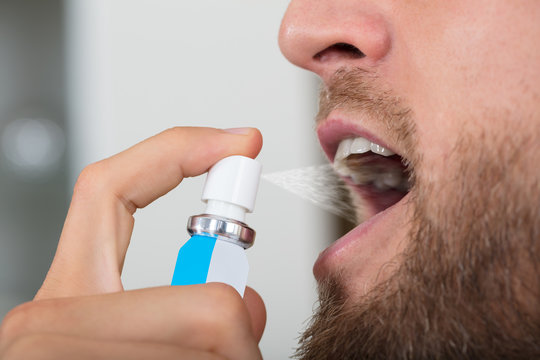 | Flavours Mouth fresheners Flavour Khattri Flavours specializes in developing customized mouth freshener flavour solutions designed specifically for manufacturers of mouth fresheners,... |
Request food-use documents before selecting a local supplier
Do not approve a custamize flavour manufacturer for mouth fresheners in lucknow on the basis of an SDS or a mint sample alone. An SDS explains hazards, storage and handling; it does not prove that the concentrate is suitable for ingestion.
Ask for controlled food-use and batch documents before signing off a mouth freshener flavour in lucknow.
| Document group | Request | What it proves |
|---|---|---|
| Technical | Product specification, composition statement, recommended dosage, physical form, storage conditions, shelf life and stability data | The flavour fits the finished format and remains usable through its stated life |
| Regulatory | FSSAI licence, food-use declaration, finished-food category assessment, allergen, GMO, irradiation, vegan, halal or kosher and contaminant declarations | The formulation and claims match the intended Indian market |
| Batch control | Certificate of analysis, batch number, manufacturing date, retest or expiry date, traceability record and retained-sample policy | Each delivery can be checked against an approved specification |
| Development | Pilot-batch report, scale-up record and finished-product sensory results at the target dose | The approved taste survives production rather than existing only in a concentrated sample |
Ask whether the product is classified as coated saunf, confectionery, tablet, granule, liquid, or an areca-nut product; that classification affects additives, flavouring permissions and labelling. If the supplier also makes fragrances, request written confirmation that every ingredient is supplied for food use. IFRA documentation concerns fragrance applications and cannot replace food-flavour approval.
A reliable custamize flavour manufacturer will connect the COA to your approved specification, not merely provide a generic certificate.
Frequently asked questions
What should you include in a mouth freshener flavour development brief?
State the finished format, ingredients, processing temperature, coating method, packaging, target sensory profile, dosage range and sales market.
How do you match flavour to a mouth freshener format?
Select a flavour system that suits the product matrix and process, such as powder, liquid, tablet, coated seed or sugar-coated format.
How is mouth freshener flavour dosage calculated?
Calculate the flavour quantity against the total finished product weight, then confirm the result through bench and production-scale trials.
Which trials should a custom mouth freshener flavour include?
Test flavour after heating, coating and drying, then repeat checks during storage in the intended packaging.
Which documents should you request from a local flavour manufacturer?
Request the food-use statement, ingredient or composition information, allergen declaration, specifications, certificate of analysis and batch traceability records.