
A dairy flavour that works in a water sample can fade after UHT treatment, disappear in a high-protein base, or develop an oil ring during refrigerated storage. You will be able to define the right flavour brief, compare ingredient options, run a production-relevant trial, and assess a supplier’s technical documentation before approving a formula.
Key takeaways
- Match the flavour format to acidity, fat, protein and processing temperature.
- Give developers pH, heat treatment, dosage, packaging and shelf-life targets.
- Compare carriers for dispersion, stability, labelling and production performance.
- Test flavour in the finished dairy matrix through storage, not just on day one.
Match the flavour system to the dairy product
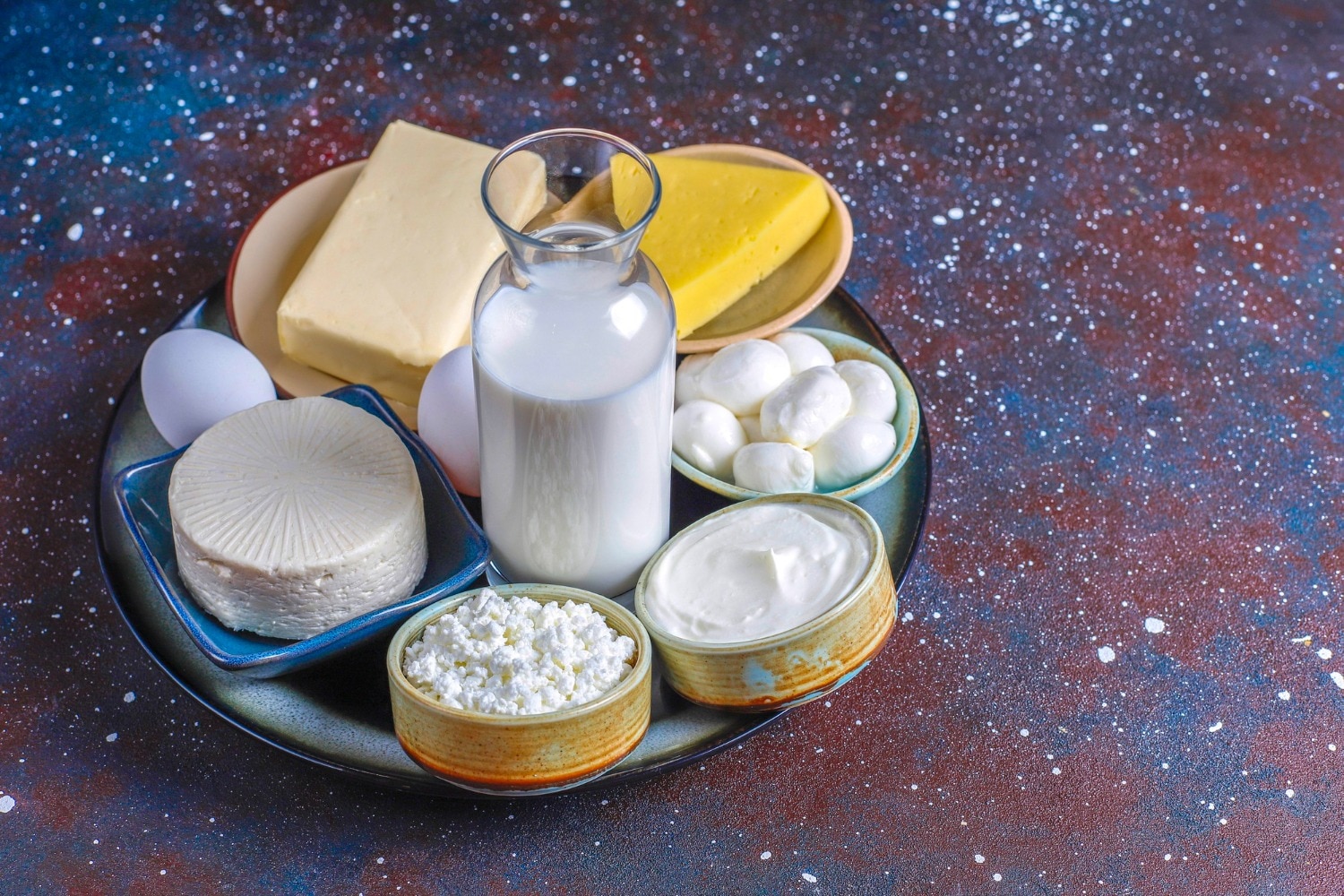
Custom dairy flavour solutions can serve yoghurt, drinking yoghurt, flavoured milk, milkshakes, ice cream, custard, creamers, cheese-based products and dairy alternatives. The suitable format depends on water, fat, protein, acidity and process stress, not on the flavour name alone.
| Product matrix | Suitable flavour format | Main selection issue |
|---|---|---|
| Water-based flavoured milk or dairy alternative | Liquid flavour or emulsion | UHT, homogenisation and storage can strip volatile notes or destabilise the emulsion |
| High-fat ice cream, cream or creamer | Oil-soluble liquid or encapsulated powder | Fat can suppress flavour release; oxidation can create cardboard notes |
| Cultured yoghurt or drinking yoghurt | Liquid flavour, emulsion or dispersion | Low pH and fermentation can intensify acidity and reduce fruit or vanilla balance |
| High-protein milkshake, custard or cheese product | Liquid, dispersion or spray-dried powder | Protein and minerals can bind flavour, increase bitterness or cause sediment |
Custom flavours for dairy products should address defects separately from the target profile. A stronger chocolate or vanilla note will not reliably cleanly mask cooked, sulphury, feed-related, oxidised or excessive acidic notes.
Match the flavour to the complete sequence: pasteurisation, UHT treatment, homogenisation, fermentation, hot or cold filling, packaging and refrigerated storage. Test the actual milk or recombined-milk base, fat level, stabilisers, sweetener, protein system and pH. Request food-use identity, purity, allergen, carrier, emulsifier, regulatory and traceability documentation; a fragrance specification is not ingestion evidence.
Give the flavour developer a complete process brief
A usable brief starts with the finished formula and process, not a flavour name. To customize flavour solutions for dairy manufacturers in Johannesburg, provide the product category, target sensory profile, intended dosage range and the batch size for trials.
1. State the base: fresh milk or recombined milk, dairy alternative, fat percentage, protein level, total solids, sweetener, salt, stabilisers, emulsifiers and acidity. Identify cultured products and give the fermentation culture, endpoint pH and holding time.
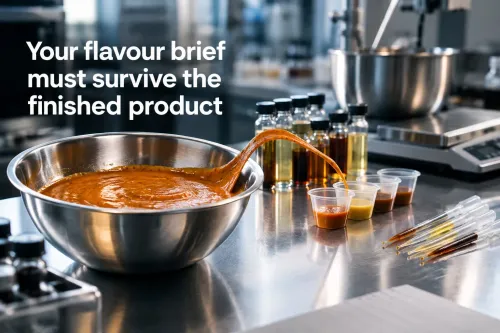
2. Map the process in order, including ingredient addition, mixing temperature, homogenisation pressure, pasteurisation or UHT temperature and residence time, fermentation, hot or cold filling, and any post-process addition. A flavour that survives a bench sample can fade, oxidise or separate after UHT treatment.
3. Describe the package and market conditions: bottle, carton or sachet; oxygen exposure; fill volume; refrigerated or ambient distribution; storage temperature; and target shelf life. Include the Johannesburg plant’s water quality or mineral profile if it affects flavour release or emulsion stability.
4. Define technical limits: acceptable colour, cloudiness, sediment, viscosity, pH, allergen restrictions, and whether the product is water-based, high-fat, low-fat or high-protein. Report the intended serving temperature.
5. Request food-use documentation for the proposed flavour: identity, carrier and emulsifier declaration, allergen status, regulatory classification, permitted-use confirmation, batch traceability, storage conditions and heat or pH limitations. A fragrance specification does not establish ingestion safety.
Send the actual production sequence and a representative base, not laboratory milk alone. Then agree the trial dosage ladder, evaluation dates and minimum batch before development begins; a specialised emulsion or encapsulated powder can require more validation than a standard liquid.
Compare flavour types, carriers and process stability
Start with the finished dairy drink, not the flavour name. Compare natural, nature-identical and artificial options by legal classification, sensory target, dosage and survival through processing.
| Type | What it means | What to verify |
|---|---|---|
| Natural | Obtained from a natural source under the target market’s definition | Source, batch variation, heat stability and cost |
| Nature-identical | A molecule made to match one found in nature | Confirm whether the term has legal standing in your market |
| Artificial | A deliberately produced flavouring outside the natural classification | Regulatory status, sensory performance and consumer-positioning requirements |
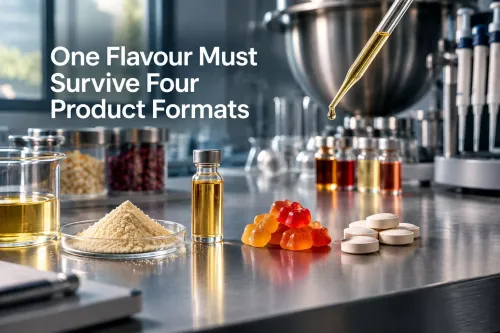
Carrier choice controls release and physical stability. Liquid flavours suit simple, cold-filled or low-viscosity products, but volatile notes can be lost during pasteurisation or UHT treatment. Oil-soluble materials cannot simply be mixed into an aqueous milk drink.
| Format | Best fit | Failure to test |
|---|---|---|
| Emulsion | Water-based dairy beverages needing oil-soluble flavours | Ring formation, creaming or an oil layer |
| Dispersion | Products needing suspended, poorly water-soluble materials | Sedimentation or uneven dosing |
| Spray-dried powder | Dry mixes, powders and applications needing improved handling | Caking, oxidation, slow reconstitution or visible particles |
Ask for the carrier, emulsifier and allergen declarations, storage conditions, pH and temperature limits, and evidence from the actual process sequence. Homogenisation pressure, protein, fat, packaging and storage can change release and oxidation, so validate custom flavours for dairy products after processing—not only in bench-top milk.
A custom dairy flavour solution should also address cooked, sulphury, oxidised or feed-related notes separately from the desired vanilla, fruit or chocolate profile.
Run a dairy flavour trial that predicts shelf life
A flavour that wins in cold milk can fail after UHT treatment, homogenisation or storage. Test it in the finished dairy matrix, not in water or a bench-top carrier.
1. Prepare the actual base: fat level, protein system, stabilisers, sweetener, acidity and fermentation status included. Make an unflavoured control and add the flavour at 0.75 times, 1.0 times and 1.25 times the dairy beverage flavour supplier’s recommended dosage.
2. Copy the factory sequence at pilot scale. Hydrate powders, blend the flavour into the correct phase, homogenise, pasteurise or UHT-treat, fill into the intended package and cool under production conditions. Record temperature, holding time, homogenisation pressure, filling method and headspace; a post-heat addition is not a valid substitute for an aseptic process.
3. Taste refrigerated beverages at their serving temperature, usually 4 to 8°C, because milk fat and proteins suppress aroma differently as temperature changes. For yoghurt, custard or ice cream, use the product’s real serving condition rather than forcing every sample into a chilled-liquid test.
4. Evaluate sealed samples at day 0, day 7, day 14, day 28 and the intended shelf-life endpoint, adding an accelerated condition only as a screening tool. Score flavour intensity, identity, aftertaste, oxidation, sediment, creaming, ring formation and oil separation against the control and benchmark.
Reject a dosage that tastes strong on day 0 but fades, oxidises or destabilises before the declared shelf life.
Choose a Johannesburg supplier on evidence, not flavour names
A supplier is not ready for approval because its flavour name matches your brief. Ask a dairy flavour manufacturer in Johannesburg for a technical file covering:
- Food-use identity and purity specification, permitted-use confirmation for your destination market, allergen status, traceability and batch documentation
- Natural, artificial or equivalent regulatory classification, plus flavour format, carrier and emulsifier declaration
- Heat and pH limits, recommended dosage, storage temperature and shelf life
- Evidence from your intended milk base, homogenisation, pasteurisation or UHT process, filling method, package and storage profile
Reject a fragrance specification as proof of suitability: fragrance materials are not evidence of safe ingestion. Khattri Aromas LLP belongs in your comparison only if it can connect its proposed flavour to this evidence and your production sequence.
| Option | What to compare | How to weigh the trade-off |
|---|---|---|
| Standard liquid flavour | Shorter development and lower MOQ; confirm heat, acidity and emulsion stability | Choose it when the process is mild and the flavour survives production |
| Custom emulsion | Longer validation and higher MOQ; assess dispersion, homogenisation and shelf-life results | Pay the extra cost when a water-based beverage needs stable flavour release |
| Encapsulated powder | Longer trials and higher MOQ; check carrier, moisture, water activity, oxidation protection and reconstitution | Choose it when powder handling and process tolerance outweigh simpler dosing |
Do not select the lowest MOQ alone. A cheaper trial that fails after UHT, storage or filling costs more than a larger batch with production evidence. Ask for the development schedule, sample revisions, validation gates and MOQ for both the pilot and repeat commercial batch.
Frequently asked questions
How do you match a flavour system to a dairy product?
Assess the product’s water, fat, protein and acidity, then account for homogenisation, pasteurisation, UHT treatment, fermentation, freezing or other process stress.
What should a dairy manufacturer include in a flavour development brief?
Provide the product matrix, target flavour profile, pH, fat and protein levels, heat treatment, homogenisation conditions, dosage range, packaging, storage temperature and shelf-life target.
How should you compare dairy flavour types and carriers?
Compare liquid, emulsion and powder formats for dispersion, heat and acid stability, carrier compatibility, dosage, labelling requirements and performance in the finished product.
How can a dairy flavour trial predict shelf life?
Test the flavour in the finished product at target dosage, then assess samples through planned storage for flavour intensity, off-notes, separation, colour and physical stability.