
Aromatherapy products can lose their fresh top notes, darken, turn cloudy, or develop rancid odours even when the original fragrance concentrate was approved. You will be able to separate concentrate failure from finished-product failure, specify a practical stability programme, and evaluate a Kolkata manufacturer using evidence rather than repeated blind reformulation.
Key takeaways
- Test the finished formula in its final pack, not only the fragrance concentrate.
- Set odour, colour, separation, and assay pass limits before stability testing.
- Use marker compounds and blending controls when natural raw materials vary.
- Reject customization when standard packaging and fragrance meet your performance target.
Why an aromatherapy scent changes after filling
A scent that smells correct in a neat concentrate can change after filling because the finished formula and pack create a different chemical environment. Fragrance consistency for aromatherapy is therefore a formula-and-packaging result, not something a single GC-MS report can prove.
- Volatile citrus and herbal top notes evaporate from the liquid, bottle headspace, pump or wick, leaving a weaker opening and altered drydown.
- Oxygen oxidises susceptible materials such as limonene and linalool into hydroperoxides and other products, causing freshness loss, rancid odour and increased sensitisation concern.
- The container, cap liner, dropper, pump or wick can adsorb or absorb fragrance materials, reducing concentration and diffusion or changing the balance of notes.
Light and heat accelerate these effects. Water activity, carrier oils, ethanol, water, emulsifiers, preservatives and botanical extracts alter volatility, partitioning, colour and oxidation rate, so custom aromatherapy fragrance problems can originate in the base rather than the concentrate.
Separate the causes by comparing the approved concentrate, the same fragrance in the final base, an unfragranced base and a retained control batch. Record each failure precisely:
- weaker top note or altered drydown
- darker colour, cloudiness, sediment or phase separation
- rancid or burnt odour, leakage or reduced diffusion
- scent change after dilution or heating in a diffuser or candle base
This comparison shows whether the fragrance, formula, process or packaging caused the drift.
A stability-testing plan with measurable pass and fail criteria
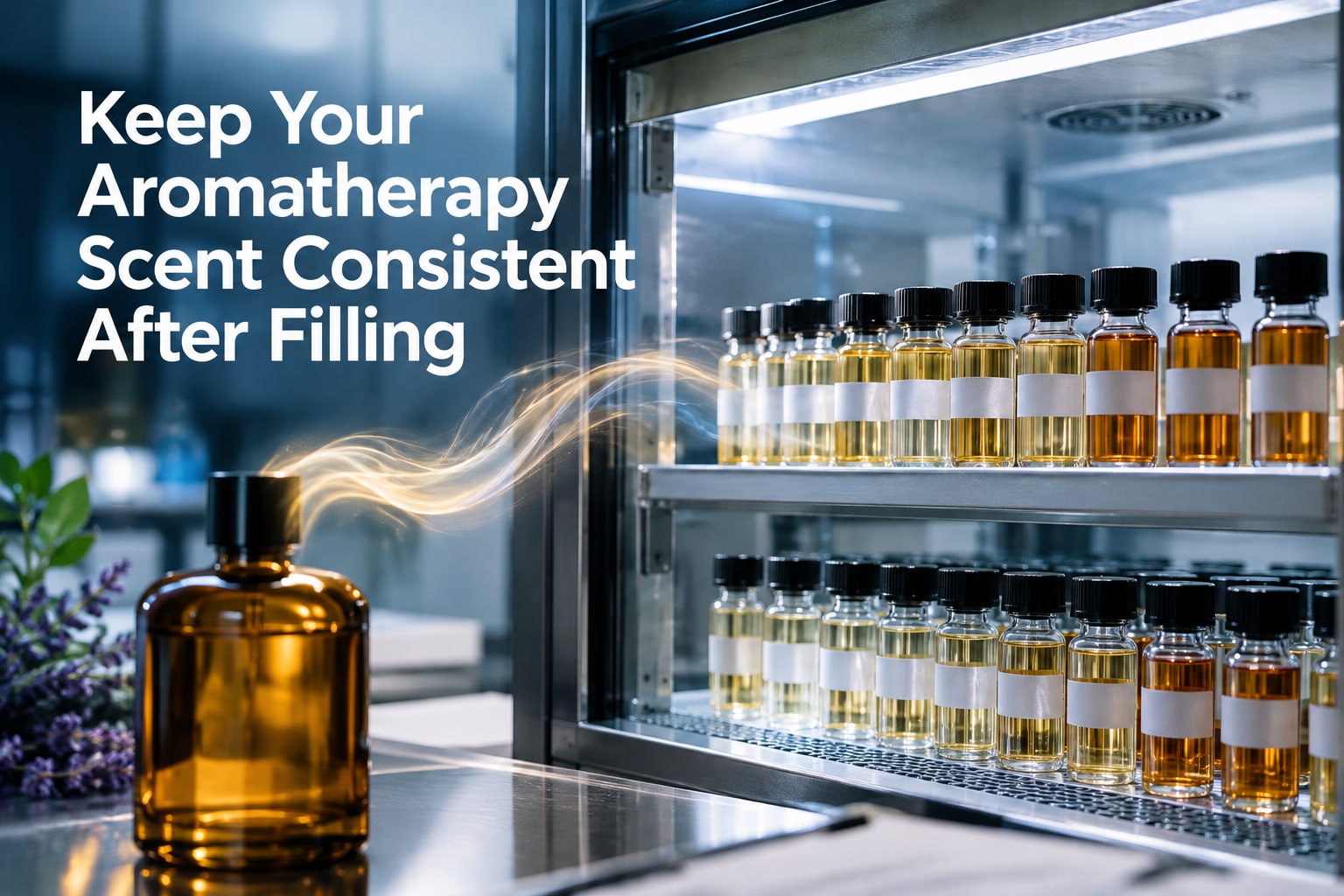
Run the comparison in the final product and its intended container, not in neat fragrance concentrate alone. Retain samples from pilot and production batches; label every pack with batch code and fill date. Keep a control batch under the agreed reference condition.
| Condition | Pack arrangement | Purpose |
|---|---|---|
| 5°C, 25°C, 40°C | Upright and inverted | Cold, reference and accelerated comparison |
| 45°C | Upright and inverted | Hot-weather screening |
| Light-exposed and protected | Final container | Light sensitivity |
| Freeze-thaw cycles | Final container | Cold-transport risk |
| Transport simulation | Shipped packs | Leakage, cap loosening and label damage |
Use day 0, 7, 14, 28, 56 and 90 as an example schedule; set the final intervals by product risk and pack format. At each interval, compare odour with an approved reference panel and record top, middle and base notes, diffusion, colour, clarity, sediment, viscosity, phase separation, rancid or burnt notes, leakage and headspace loss.
Write pass criteria before testing. For example:
- Named descriptors remain within the approved sensory profile, with no rancid, burnt or unexplained drydown.
- Colour stays within the agreed limit, such as a defined visual standard or ΔE value.
- No sediment or phase separation appears where prohibited; viscosity remains within the specified range.
- No leakage, cap loosening, label damage or unacceptable headspace loss occurs.
- Agreed chemical markers or identity ranges remain within specification.
The 40°C/75% relative-humidity condition is associated with ICH Q1A(R2) accelerated screening. It ranks formulas and packs; it does not prove an exact aromatherapy shelf life. That is the basis of a defensible aromatherapy fragrance stability solution.
Formulating for consistency when natural materials vary
Lock the raw material before you lock the formula. Specify botanical species, chemotype, geographic origin, plant part, harvest period, extraction or distillation method, storage history, allergen profile and permitted substitution rules. Qualify suppliers against organoleptic limits, density or refractive-index ranges where relevant, and chromatographic marker ranges.
| Material | Natural batch variation | Oxidation and heat performance | Cost and supply continuity | Regulatory and consumer-positioning workload |
|---|---|---|---|---|
| Natural essential oil | Highest; harvest and origin shift odour | Susceptible materials can drift | Crop and season affect availability | Highest documentation and “natural” claim scrutiny |
| Nature-identical material | Low, with controlled specification | Often more predictable | Usually steadier supply | Requires accurate ingredient and claim review |
| Synthetic aroma chemical | Low when specification is tight | Select materials for strong resistance | Broadest sourcing options | Ingredient restrictions and consumer acceptance still apply |
A stable hybrid formula can protect a signature profile without presenting every ingredient as a natural essential oil. Use GC-MS for identity, adulteration screening and marker tracking, then use a trained odour panel: trace-impact compounds, odour thresholds and oxidation products can change perception without materially shifting the largest peaks.
Test antioxidants and chelating agents as controlled comparisons, not universal fixes. Record effects on odour, colour, packaging compatibility and the natural-positioning claim. Keep the fragrance specification, finished-product safety and stability specification, claims review, and product-category-specific IFRA conformity information separate; an IFRA Certificate of Conformity does not replace finished-product safety evidence.
Choosing packaging and knowing when customization is the wrong choice
The pack is part of the fragrance solution, not a neutral container. Choose amber or opaque glass over clear glass when light-sensitive materials are present; use glass, aluminium, or a low-oxygen-permeability multilayer polymer where the product and dispensing method permit.
Minimise headspace, then test the bottle, cap liner, pump, dropper, wick and seal for adsorption, permeation and leakage.
Open the filled pack repeatedly in retail and treatment-room simulations. Each opening replaces part of the headspace with oxygen and increases volatile loss. Test after dilution, heating or diffuser use when those conditions define the customer experience; otherwise, a stable concentrate can still create custom aromatherapy fragrance problems.
A custom solution is a poor choice when:
- The claim depends on one unstable botanical.
- The pack cannot control light or oxygen.
- The aroma must remain unchanged across highly variable harvests.
- The brand cannot support pilot batches, compatibility testing and reapproval.
Custom formula | Standard fragrance | Off-the-shelf essential-oil blend Distinctiveness | Highest; supports a defined signature | Moderate; faster selection | Limited by available profile Shelf-life risk | Requires formula-and-pack testing | Usually easier to benchmark | Natural variation and oxidation risk Documentation | Development records, specifications and reapproval | Supplier documents and conformity review | Supplier documents; variable detail Sampling effort | Multiple rounds and filled-pack trials | Fewer rounds | Lowest Minimum order and lead time | Often higher and longer | Usually lower and faster | Usually lowest and fastest
Choose the option that meets sensory and physical limits in the finished pack, not the one with the strongest first smell.
How to evaluate a B2B aromatherapy fragrance manufacturer in Kolkata
Start with a written service boundary, not a pleasant first sample. Ask an aromatherapy fragrance manufacturer in Kolkata to state exactly what it owns from brief to production release.
1. Confirm coverage for the fragrance brief, number of sample rounds, pilot batch, finished-base compatibility, accelerated and real-time stability, packaging trials, production-batch controls, minimum order, reapproval triggers and change-control timing. Khattri Aromas LLP can be assessed as a Kolkata-based B2B partner against this checklist.
2. Request the fragrance specification sheet, certificate of analysis, allergen declaration, IFRA Certificate of Conformity where applicable, SDS, batch code, retained-sample procedure, raw-material substitution rules, finished-product release specification and change-control record.
3. Require an odour reference-panel protocol with labelled reference samples, defined descriptors, evaluation temperature, dilution or application method, named assessors and an approval record signed against a control batch. A single neat-oil sample proves little about the filled product.
4. Check whether the quality system follows ISO 22716 principles, then ask to see batch records, cleaning controls, storage conditions and shipment controls. ISO 22716 supports cosmetic GMP; it does not prove odour stability.
5. Price the work honestly: pilot sampling, formula revisions, packaging-compatibility trials, accelerated testing and reapproval all require time and samples. This is the practical route to a b2b customize fragrance solution for aromatherapy scent changes in kolkata.
Related product
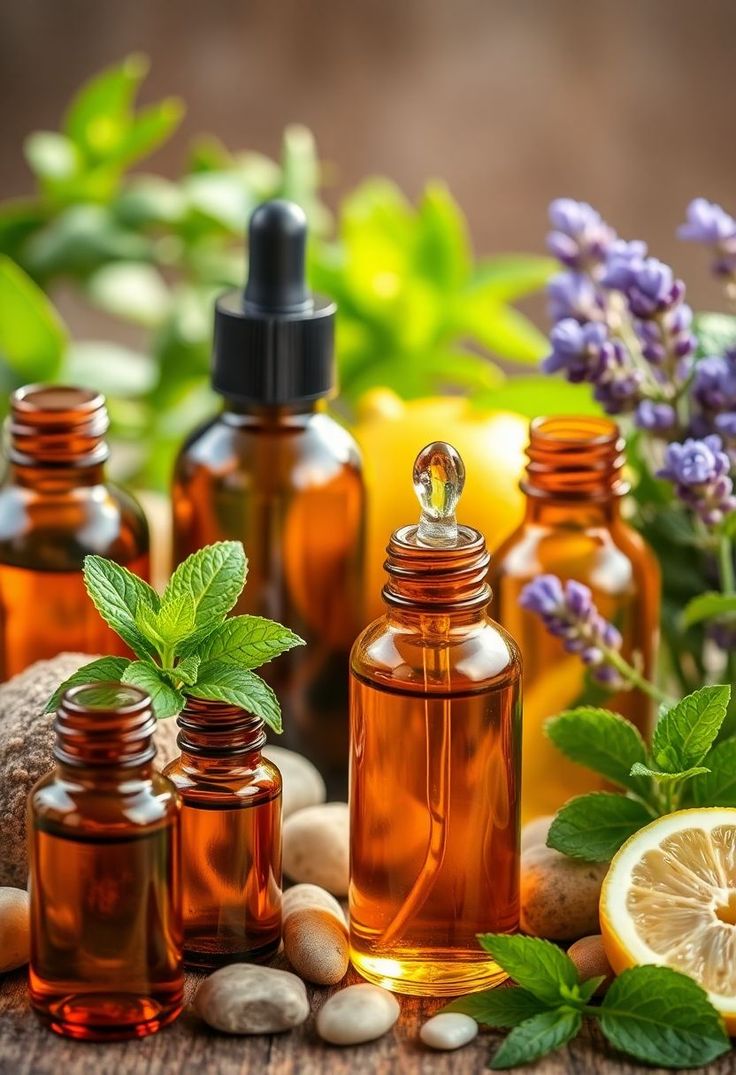 | Fragrances Aromatherapy Fragrances Aromatherapy Fragrance Manufacturer| Customized Aromatic Solutions for Wellness Brands, Customized Aromatherapy Fragrance Solutions for Wellness &... |
Frequently asked questions
Why does an aromatherapy scent change after filling?
The base formula, oxygen, light, heat, headspace, closure, and packaging materials can alter fragrance evaporation, oxidation, absorption, or release after filling.
What should an aromatherapy fragrance stability test measure?
Track odour against a reference, colour, clarity, separation, viscosity, pH where relevant, leakage, and key fragrance markers at defined storage intervals.
How can manufacturers maintain consistency when natural materials vary?
Set raw-material specifications, test incoming lots, use marker compounds or chemical profiles, blend approved lots, and adjust the formula within documented limits.
Which packaging factors affect aromatherapy fragrance stability?
Evaluate glass or compatible plastic, liner and closure materials, light protection, oxygen exposure, headspace, seal integrity, and interaction between the formula and pack.
How should you evaluate an aromatherapy fragrance manufacturer in Kolkata?
Request representative samples, formulation and stability records, raw-material controls, batch-traceability documents, scale-up evidence, and clear pass-fail specifications.